October 15, 2022 – “About Me”
My first blog entry would serve as a “fact file” about myself as a means to introduce to writer of the blog, before any “real” content was to be published. It contains all the important information one might expect to find of a MA blogger i.e. name, course, college, and previous study. I also included a brief statement describing my academic interests.
“My interests range range from old to middle English literature through to early modern literature.
My past study of history draws me to consider older texts within their contextual history. I am fascinated by the overlap of Old English and Norse literature, as well as the overlap between Celtic literature and Middle English literature. I am interested in the ways in which literary traditions influence one another.
I enjoy the study of theology and the ways in which theological ideas have shaped many medieval texts, such as the writings of the Pearl Poet.
I am interested in ecocritical readings of medieval works, such as Beowulf and Sir Gawain and the Green Knight both of which explore the dangers of the natural world, revealing the fears it produced in the minds of medieval writers.
I am particularly interested in the ways in which older works have been adapted and received by modern audiences. I am particularly drawn to the imaginative writings of J. R. R. Tolkien and C. S. Lewis, examining the ways in which they recreate, reimagine, and repurpose older texts within their own works.”
Looking back, I find it of great interest that I would in fact decide to write my thesis on the subject of the reception of medieval literature. My thesis will focus on the works of J. R. R. Tolkien, whom I even mentioned in this post. Although it was clear I was interested in writing on this topic from day one, for a while I imagined that I would write about lay theologians of the medieval period.
I would later add the below picture to the post of my graduation day.

November 2, 2022 – “The Defence of Medievalism”
My first blog post set out to be a defence of the study of medieval matters, in a way defending the academic pathway I have taken. This was in response to certain arguments I had seen attempting to dismiss the period as backwards and without use to our modern society. I personally reject this idea. While the medieval period was certainly not a wonderful time by any standards, there is certainly much to learn from the period, which is what I tried to highlight in this post.
“There is an attitude directed at the medieval period which suggests it was a particularly dark time in human history. Hence, many will freely use the terms “middle age” and “dark age” interchangeably. The use of the term “dark age” to describe the entirety of the medieval period is highly misleading. It is true to argue that there were certain aspects of the medieval period that can be rightfully described as “dark.” One thinks of the expulsion of the Jews from many major cities across Europe, the witch trials that resulted in the deaths of many innocent women, the bubonic plague, among several other examples of “darkness” and can understand why many dismiss the medieval period. However, it does a great disservice to the period to define it using only its worst attributes. However, as with any period of history, there are gems to be found. The gems of the medieval period are, in my opinion, examples of triumphs of progress. Consider the monumental feats of architecture produced, without the use of power tools, throughout the Middle Ages. Romanesque and Gothic cathedrals, including works of magnificence such as Brunelleschi’s dome, as well as countless examples of beautiful stained glass, which to the medieval eye was a picture of what heaven would look like. Note also, that the modern university, which is seen as the epicentre of academic learning and progress was both conceptualized and founded in the medieval period.
And finally, of course, we come to the literature of the Medieval period, which is the area of study I have embarked on in my degree. Often overlooked in favour of the works that came before and after, medieval literature stands as among the most influential periods literature production in human history. Writers such as Giovanni Boccaccio, Dante, Geoffrey Chaucer, John Gower, as well as countless anonymous authors that produced works of epic proportion throughout the medieval period, of a quality that to this day impresses historians and scholars. They engaged in topics relating to history, religion, society, morality and gender to the extent that through the study of medieval literature, one obtains the key to understanding the ideas and values on which medieval culture was built. Understanding this gives one insight as to where various western values such as chivalry originated.”
November 24, 2022 – “The Influence of Augustine on Medieval Texts”
A ‘history of the book’ class I had taken on the Harley 2253 manuscript sparked my interest in the interaction of theology with secular works in the medieval period. The Harley Codex is famed for having one of the largest selections of secular lyrics in surviving medieval literature. Yet I was fascinated by the pervading religious themes within. I explored the subject in this blog post.
“The poem that follows the Augustinian lines is a middle English poem Earth upon Earth. Read independently, the poem would seem to have no apparent connection to Augustine. However, the poem does continue the theme of mortality that has been present throughout the preceding poems. In this poem, the word “erthe” is used to describe humanity, therefore likening man to that of the primal element. This reminds the reader of the fleeting nature of life, calling to mind biblical passages such as Genesis 3:19 which states “you are dust and to dust you shall return.” This poem serves as the ultimate reminder of the inescapable nature of death, and when read directly after Carnal love is Folly and What Allures is Momentary, one is forced to consider the meaningless of a life wasted perusing temporary and fleeting pleasures.”

December 5, 2022 – “Predestination in Troilus and Criseyde”
This post was inspired by my study of Troilus and Criseyde in our medieval literature module. It served as a continuation of my interest in theological themes within medieval literature. In this post I discussed the doctrine of predestination as a narrative tool in Chaucer’s famous epic.
“The Troilus engages with the concept of predestination in what has been labeled the “Boethian Soliloquy” which is spoken by Troilus in book four (lines 958 – 1078). In this soliloquy, Chaucer, like Boethius, draws upon the anxiety caused by the implications of the concept of predestination. Troilus, dismayed that Criseyde has not yet returned to Troy to be with him, becomes overtaken with this anxiety stating “For al that comth, comth by necessity: Thus to be lorn, it is my destinee” (Chaucer, 550). Here, Chaucer through Troilus argues that the implications of predestination means that people have no free will. This exact argument was put forth by Boethius in Consolidation. However, Chaucer does not approach the question of predestination as a philosopher, but as a writer, and therefore has no need to bring the issue to a cathartic resolve, as Boethius does. Chaucer makes no attempt to solve the puzzle of how predestination and free will can coexist, meaning Troilus comes to the conclusion that nothing can be done to change his fate, other that to pray to God that it may be changed, but even his prayer contains a tone of defeat: “Almyghty Jove in trone, That woost of al thys thyng the sothfastnesse, Rewe on my sorwe: or do me deyen sone, Or bryng Criseyde and me fro this destresse” (Chaucer, 552).
It is not likely that Chaucer failed to reconcile the concepts of fate and free will due to a lack of understanding of his Boethian source. This is because Chaucer’s intention is not to contribute to the philosophical discussion surrounding the concepts, nor is it to prove one over the other. Chaucer’s interest lies entirely in the human element of these philosophy’s. Therefore, Chaucer’s aim is to explore the impact that the implications of predestination can have on a person. Chaucer, through his depiction of Troilus, takes a disapproving view of those who adhere to the concept of a predetermined fate. Troilus’ failure to recognize that is fate is in his own hands leads him to a lack of action, which ultimately leads to his demise, wasting his potential to become a heroic figure of chivalry”
February 7, 2023 – “Medieval Narnia”
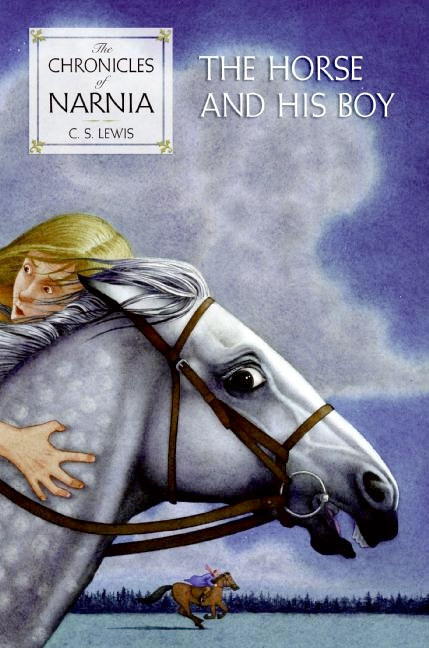
This post served as a critical reading of C. S. Lewis’ ‘The Horse and his Boy.’ I was fascinated by the presence of medieval Celtic tropes within the text and was inspired to explore them through the means of a blog post.
“The first area of interest which would be illuminated to me would be that of the geography of Lewis’ mythical world surrounding the land of Narnia. The Horse and his Boy is a unique book within the series as while it details a journey into Narnia, as is the case with the other books of the series, this is to be the first book which does not employ the use of interdimensional travel from our world to Narnia, rather, it narrates their journey of characters from one of the neighbouring lands into Narnia. It is therefore logical that this book should be far more interested with the geography of the Lewis’ mythical world than any of the others (with perhaps the exception of The Voyage of the Dawn Treader concerned with the oceanography of the world). The first insight the reader is given into the geography of this world is that of the true identity of the main character, Shasta, who finds out through overhearing a conversation between his supposed father and a nobleman that he is form the North of this world “like the accursed but beautiful barbarians who inhabit the remote North” (Lewis, 207). It was this line in particular which Rachel found to be of interest, who pointed out that this quite interestingly mirrors the anthropology of our own world. The Celts were a collection of peoples who inhabited lands to the North of the Mediterranean region. And these peoples were seen by the Greek and Roman cultures to be “barbarians.”
It was of interest to her that the Lewis would be concerned with the “barbarians” of his imaginative world in this book, in which a young boy would be taken on a journey to another land. This is indeed a trope of Celtic storytelling, consider for example, the story of Oisín in Tír na nÓg. In this tale the protagonist, Oisín is brought to the land of the young (Tír na nÓg) to marry the princess of this land, Niamh. It is an intriguing fact that the land of Narnia is also, to some extent, a land for the young. Lewis’ books are told from the perspective of children who find their way into Narnia through various portals (wardrobes, paintings and train stations for example). This theme relates nicely to the Celtic “otherworld” trope in which characters find their way into alternate worlds through seemingly ordinary, everyday means – consider texts such as Sir Orfeo and Thomas of Erceldoune. As well as this, Narnia is a world in which the children who enter, though they may age in the world of Narnia, will remain the same age in the “real world” as is revealed in the ending of The Lion, the Witch and the Wardrobe. In other words, time works strangely in Narnia, and this is also true of the Celtic otherworld.”
March 29, 2023 – “The use of Archaic Language in the works of Edmund Spencer and J. R. R. Tolkien”
This blog post would serve as an intertextual study of the works of modern fantasy author J. R. R. Tolkien and early modern poet Edmund Spencer. I found that although their works are different in approach, they shared a common use of archaic language to create a sense of history in their works.
“Spencer’s use of language that is of great interest to me, for although he is a 16th century writer, the language of the Faerie Queen has been noted by scholars as archaic. And this observation is not simply made because it may comes across this way to modern readers due to it being several centauries old, the way a Shakespeare play is to a young student. It is in fact an observation on Spencer’s choice to write in an archaic style. Spencer is, of course, attempting to mimic medieval language, specifically the middle English language of Chaucer. This is an attempt to create a sense of nostalgia for the medieval world, its culture, and most importantly, its chivalry.
[…]
Now this post shall consider the writings of Tolkien, and I have decided to focus on The Silmarillion as I have found it to be similar to be worth bringing into dialogue with The Faerie Queen as a work which utilizes archaic language. The Silmarillion was a posthumous publication of 1977, edited by Tolkien’s son Christopher. The Silmarillion serves as a mythological background to Tolkien’s imaginative world. This work is quite unlike his other imaginative writings. It lacks any sustained use of descriptive writing or dialogue, focusing instead on compressed narration and documentation of the events. It reads, essentially, like history. Tolkien had already displayed his ability to write in an engaging and sometimes even humorous style through The Lord of the Rings and certainly The Hobbit. Therefore, his decision to write in a condensed, impersonal style for this text was completely intentional. His decision to make little use of his authorial authority reflects a key aspect of this text – that it is not “his” work. It is in fact, the work of the fictional characters of his world, the elves, who have collected the tales of the history and mythology of their world and produced The Silmarillion.”
April 8, 2023 – “Filling in the Gaps: The Ruin”
As a fun exercise, I decided to imagine what ought be in place of the blank spaces to be found in The Ruin poem of Old English literature caused by damage. It was proceeded by a brief introduction to the text.
“The Ruin is an old English poem contained within the Exeter Book. This manuscript was written during the latter half of the 10th century. It is among the most important codex’s of its time, containing a large percentage of surviving old English poetry, including monumental works such as The Wanderer, and The Seafarer as well as a great number of riddles. The Ruin, however, would be among my favourite of the Exeter Book poems, and of the old English poems generally. It is of a genre most unique to the old English literary world, elegy of place, which reflects on and laments for a particular location, rather than a person. This particular elegy observes a decaying set of buildings, a ruin, and laments for its former glories. It is thought that the ruin in question is that of the city of Bath, and that the early English poet was moved to produce this work upon examining the decaying Roman city walls in Bath, which had been built and abandoned some centuries earlier. The decaying walls of the past Roman structures perhaps caused the poet to reflect on the momentary nature of human societies in the grand scheme of time. The poets own society and culture would eventually fade after the Norman invasion. Perhaps the poet had already recognised this dwindling, making The Ruin a sort of allegory for their own society.”
April 10, 2023 – “Textualities 23”
Finally, this post would serve as an account of the mini-conference that UCC’s department of English masters students held. It was a hugely successful day in which many fascinating topics were presented on.
“I was the first to present on the day, which was certainly nerve wracking. My nerves, however, quickly settled once I got into the swing of presenting, though I was relieved to finally be finished when my twentieth slide had ended. The format of our presentations was that of “Pecha Kucha” which involves presenting a set of twenty slides for twenty seconds each. This was sure to be a challenge, and I quickly realised this when I gave a practice presentation in class a week earlier. I was surprised to find how quickly twenty seconds went by, realising that I had been rather ambitious as to how many points one could truly develop over the course of twenty seconds. I realised that my slides would require refining, allowing my points to be more focused, leading to a stronger presentation of my argument.
Being first up came with its perks, as I could truly relax afterward and enjoy to the full each presentation that proceeded my own. I was able to enjoy presentations on a wide range of texts from a variety of critical approaches. I personally found it of interest to witness a few presentations from eco-critical approaches, as this would be an area I enjoy reading into. I also particularly enjoyed the presentation’s of my fellow medievalist students, who presented on medieval ghost stories and gender identity and agency in Chaucer’s Troilus and Criseyde respectively. But aside from the topics I had some prior interest in, I had the pleasure on witnessing a plethora of fascinating presentations, stepping outside the bubble of medieval studies and opening my eyes to the wider world of literature academia. Everyone involved made the day truly a pleasure to partake in and witness. I certainly look forward to attending similar conferences in the future!”

Concluding thoughts
This academic year has been something of a journey for me. At the beginning of the year my interest was drawn to the influence of theological ideas and doctrines on the works of medieval literature. This is reflected in my early blog posts. However, my attention quickly turned toward the area of reception studies at the turn of the year. What brought about this change is hard to identify, but I believe I must have been inspired by my reading of The Horse and his Boy to renew my interest in this area, thus fanning the flames that would eventually lead to my thesis idea. Overall, this has been a fascinating experience and a productive year of learning. I now look forward to the writing of my thesis!